Showing posts with label finance. Show all posts

Do This: Log Into Your AT&T Wireless Account to See if the Price of Your Plan Dropped

If your cell phone carrier is AT&T, I recommend logging into your account at wireless.att.com to see if the monthly price of your plan dropped.  If the price did decrease, it will literally take you two minutes to make your changes and save significant coin.  


AT&T Wireless: You Won't Get Any Complaints From Me
Yesterday, I logged in to change my auto-pay credit card's expiration date and, to my surprise, was immediately given an option to select a new price point for my shared mobile plan.  For the same plan of two iPhones with shared 2gb of data, unlimited calls, and unlimited texts, the price decreased from $140 to $90 a month.  For the exact same plan! Again, AT&T lowered the price of our plan by $50 a month and even gave me the option to back-date the change a month.  Yes, please!

I read about the price cuts a few weeks ago, but hadn't checked to see if the changes applied to me, a customer still under contract.  I assumed they wouldn't and boy was I wrong.  

I've never seen any service provider voluntarily offer a price reduction in such a customer-friendly manner.  Kudos to AT&T and apologies to its shareholders.  

Read This: Thoughts on How to Pay for Starwood Stay

With a two-night stay at Le Parker Meridien in New York City coming up this summer, I did some points vs. cash analysis to figure out the best way to pay for the hotel.  I thought I'd share my analysis.

As a Category 6 SPG property, the stay will cost 40,000 SPG points (20k per night) or $715.00 after taxes using a wedding rate.  Based on this, I narrowed my payment choice to three options: Starwood Points redemption, charge to my SPG American Express, or charge to my Barclay Arrival MasterCard.  

A new notes before I get to the chart: 
  • I have enough SPG points to last me a couple years based on historical trends.  Likewise, I have enough Arrival points to cover the trip.
  • How/Why I calculated "Points per $3.95":  I basically pay for points because I can get more value from using the points vs. buying the points (4/5 of a penny or much less per point).  I do this using Bluebird and Serve accounts and it's a bit complex.  If you want to read more on this, I recommend reading some of the Frequent Miler's posts on the subject.  
  • I have SPG Gold status, which provides three points per dollar on hotel stays.  The SPG Amex earns two points per dollar on eligible Starwood hotel charges.  The Arrival card earns two points per dollar on any charge.  
  • I didn't include using Chase Sapphire Ultimate Rewards points because the reservation options for this hotel were screwy and I was afraid I'd be stuck with a sub-par room if I used this option.
Here's my chart (it's a little ugly because I wasn't planning on sharing it).

Chart: I'm not sure this will make sense to other people
So, which option do you think I chose...

Answer: I'm going with the Barclay Arrival option.  Here's why:
  • Lowest in Overall Cash Cost.
  • Earns both good SPG and Arrival points from the charge.
  • Finally, while it's not included in the analysis in the chart, I don't like the 1.8 cents per point value from using my SPG points.  I like to get at least 2 cents per point out of using SPG points.  
That's it.  I just though I'd share.  Does this make sense to anyone else? 

Use This: Cash Back Portals for Online Shopping

Happy New Year!

Everyone's list of New Year's resolutions should include something along the lines of "save money."  One of the easiest ways to save money is to use online portals to earn cash back on your online (including in-store pick-up) purchases.  Simply, sign-up for the following online cash back portal sites and start using them.  
To read more details about how to use these cash back sites, visit Part III: Use This: Cash Back Portals for Online Spending of my Primer: Stretch Your Spending.  Meanwhile, I'm off to the bank to deposit my latest $2.32 check from Ebates.

Consider This: American Express Starwood Preferred Guest Credit Card

I have the Starwood Preferred Guest American Express Credit Card.  It's consistently ranked as one of the best travel credit cards, but for some reason I'm kind of ashamed that I pay the $65 annual fee every year to keep it.*  However, this month, I've finally accepted that this card is worth keeping and I'm ready to admit it.  Here's why :

  • Valuable Starwood Points**: Each dollar charged earns 1 Starwood point, while charges at a Starwood property earn 2 points per dollar.  I just redeemed 36,000 Starwood points for 3 nights at the W French Quarter in New Orleans.  If I paid cash for a discounted room rate there, it would have cost me $1,197.41.  In this case, each Starwood point is worth 3.32 cents.  That's some good value! 
  • Starwood Gold Status After Charging $30,000 Per Year: Basically, every year I stop using the card once I hit the $30,000 threshold to earn SPG Gold Status.  This year, after charging enough to reach Gold again, Starwood gave me a bonus gift of either double points for a month or 25% off a rewards stay.  I took the second option and applied it to my upcoming New Orleans stay.  So, that aforementioned stay is now only costing me 27,000 points, upping the value to 4.43 cents per point.
  • Special "Offers for You": When you log into your American Express account, there are a bunch of special offers that you can apply to your credit card with a click of the mouse.  I just used a $10 off $50 at Lowes, which I applied to my account about a month ago and forgot about.  About 15 minutes after I placed my Lowes order this morning, American Express sent me an email confirming that I used the offer.  I don't think I'll use the $5 off $25 at Forever 21, but it can't hurt to save the offer to my card just in case.
  • Twitter Specials: If you follow me on twitter (@OurTipsAndTrick), you'll know I don't really know how to tweet.  However, even I was able to figure out how to take advantage of an AmEx twitter deal to earn a $5 statement credit each time I charge $25 or over at a BP gas station.  First, go to sync.americanexpress.com/twitter and sync your AmEx with your twitter account.  Second, tweet #AmexBP.  If you receive a reply from @AmexSync, you did it.  Deal expires December 31.  I'll probably save at least $20 with this.  
I Did It!!!
  • Small Business Saturday: Each year, American Express sponsors Small Business Saturday, which provides credit card users statement credits for shopping at a small business.  This year, users who register will receive a one-time $10 statement credit after spending $10 or more at a qualifying small business on November 30.  Last year the amount was $25, but free money is free money.  You can register every AmEx you have and will receive one $10 statement credit per card.  Registration starts November 24.  All I know is I'll be getting myself an essentially free Pork and Fries from Earl's.  
If you don't have this card already, I'm not advocating that you rush out and grab it.  Wait until they offer a 30,000 point sign-up bonus, which if memory serves me, happens at least once a year during the late spring / early summer time frame.  Furthermore, I still can't recommend this as a primary credit card, as I continue to prefer the Chase Sapphire Preferred and Barclay Arrival as a principal card to earn travel rewards.  

If you do have this card or another AmEx, be sure to take advantage of some of the benefits posted above, as they're not all unique to the SPG AmEx.  

* First year annual fee was waived, second year they gave me a $40 statement credit to keep the card, and the last couple years they called my bluff and wouldn't waive or decrease the annual fee.

** Until the next devaluation.  You can also turn 20,000 Starwood points  into 25,000 airline miles, but it can take up to a couple weeks for the transfer to go through.  

Read This: Our Tips and Tricks Power Ranking

To celebrate Our Tips And Tricks' 80th day in existence anniversary, we present a Power Ranking of of our top 10 tips and tricks.  If you haven't read these tips, you should.
  1. "Stretching" Your Spending series of articles.  So good we compiled them all in a primer.  Follow these simple tips by signing up for an airline dining program, using cash back portals for online purchases, and maximizing credit card rewards.  A recent study conducted by OurTipsAndTricks.com shows that not following these tips costs American consumers $3.5 billion per year.*
  2. Replace Your Incandescent Light Bulbs with LEDs.  Good long-term, home investment tip.  Depending on how many bulbs you replace, the decrease in your energy bill can be noticeable.
  3. Hang Ikea Ribba Frames Easily.  Genius, original Our Tips and Tricks fix to a problem.  Gets a lot of love via Google searches.
  4. Panasonic FlashXpress Toaster Oven.  Fantastic toaster oven.
  5. Target REDcard Debit Card.  Save 5% on all Target purchases without a hard credit inquiry.
  6. Let's Dish.  Includes an exclusive, Our Tips and Tricks coupon code for $10 off and free cookies.
  7. Tips for Home Improvement Projects.  Some good stuff here.  Learn from my mistakes.
  8. Window Blinds from SelectBlinds.com.  A good tip that should have been included in the original top tips for home improvement projects.  
  9. Avoid Credit Card Annual Fees.  Too many people I know needlessly pay their credit card annual fees. Don't be another victim.
  10. Price Protection and Other Credit Card Benefits.  Knowing your credit card benefits can save you some serious money.  
* Study may have no basis in reality and may be fictional.

Do This: Haggle with SiriusXM


*Ed. Note: I don't know why this old post is posting again.  This isn't an intentional repeat.  If I wanted to repeat a tip, it would be this

SiriusXM radio is a pretty good source of entertainment and provides a comprehensive selection of music, but it's far from a necessity.  Moreover, in my opinion, it is not worth the advertised cost of $14.49 or $17.99 a month.  

In my case, our car came with a free trial of SiriusXM.  Once the free trial was up, they wanted a total of $184.66 per year to continue the service.  At a little over $15 a month, that was simply not going to happen.  

So, I simply called their customer service department and told them I wasn't willing to pay $185.  

"Would I be interested in their service for $100 for a year?" they asked.  

"Unfortunately, no..." I responded. 

"How about $30 for five months of service, to give you time to reevaluate?' they countered.

"Sold!"

I have now had this same conversation with SiriusXM about six times and continue to renew my subscription for $30 every five months.  They made me an offer I was willing to pay and I accepted it.

My guidance here is simple: If you're paying full price for SiriusXM, or any service provider like Comcast, etc., and feel that you're not getting good value, call them and speak to a customer service agent.  Explain your situation, and more often than not, this simple phone call can save you substantial money, and in their case, keep a happy customer. 

Do This: Avoid Credit Card Annual Fees

When applying for my first credit card fifteen years ago, my only requirement was no annual fee.  If I remember correctly, I got a free Boston Celtics t-shirt for applying for this no fee, no frills card.*

Since then, I've learned to use credit cards to stretch my spending and reap valuable sign-up bonuses and other rewards.  Yes, rewards even more valuable than a Celtics t-shirt.    However, I've also learned that, most often, the best credit cards come with annual fees.  

Typically ranging from $65 (Starwood Amex) to $450 (Platinum American Express), credit card annual fees can make a significant dent in your wallet and negate a card's benefits.  That being said, they can also be worth it if the provided benefits are valued more than the annual fee.

Regardless, I hate paying annual fees on my credit cards.  Therefore, I always try to have them waived and I advise you to do the same.  A quick phone call to a credit card issuer with a request to cancel a card (or a complete bluff) will often save you the cost of an annual fee.

My Advice Regarding Credit Card Annual Fees
In the event you have a credit card with an annual fee, you should always call your issuer (American Express, Chase, etc.) to "cancel" your card right before or immediately after the annual fee comes due.  Even if you want to keep the card, call and bluff.  Often (although your results may vary) credit card companies will offer to waive or lower the annual fee or provide you an opportunity to earn bonus points in order to keep your business.

If your credit card issuer will not make you an annual fee offer, you still have options.  These include:

  1. The issuer may allow you to switch your line of credit to another one of their no-annual fee cards.  I've taken advantage of this many times, as I want to keep my available credit high for my credit report.  Even if I have no plans to use the new card, this is usually my option.
  2. Keep the card if you think the card's benefits outweigh the annual fee's expense.  I'm not telling you to cancel or downgrade all cards with an annual fee.  I usually have at least two cards that I'm paying an annual fee on because, in these cases, the card benefits are worth it.
  3. Follow through and cancel the card.  However, before you do this, try calling back a couple times to try your luck with different representatives.  Also, if you have another credit card with the issuer, ask to transfer your available credit to your other card before closing the account.  Closing your card will affect your credit score.  Consider how this decision will affect your credit rating, especially if you plan to refinance a mortgage, apply for a new loan, etc.
My Experience 
Whenever one of my credit cards with an annual fee comes due, I always try and get out of the annual fee...even when I fully plan to keep the card.  Here's a snapshot of my experience with some cards, all of which had annual fees that were waived for the first year as part of the original sign-up offer.
  • Marriott Rewards Premier with Chase ($85):  I've had this card for years and paid the annual fee many times before learning this tip.  Last year, upon my call, they gave me an offer of 10,000 bonus Marriott points if I spent $1,000 in three months.  Sold.  This year, they gave me a night certificate for a Category 1-4 hotel if I charged $1,000 in three months.  Sold again.  Even without these retention offers, this card offers one free night at a Category 1-5 Marriott on each account anniversary, so this is a case where the card benefits outweigh the annual fee.
  • Starwood with American Express ($65 annual fee): When my first year with the waived annual fee passed, they gave me a $40 statement credit.  The following year, AmEx would not offer me a statement credit or similar enticement, but they gave me the option to transfer my account to one of their products without an annual fee.
  • Every Citi Credit Card I've Ever Had ($ varies): I've essentially had the same experience with every one of my Citi credit cards.  The first year I call, they waive the annual fee for another year.  The second year, they don't budge and I downgrade to a card without an annual fee.  However, this year, I got Citi to waive the annual fee on my AAdvantage Visa for a second year in a row.  My call and reason for cancelling (confusion regarding proposed merger with US Airways) bought me a third, annual fee-free year.
  • United Signature with Chase ($95): This card was replaced about a year and a half ago by the new United MileagePlus Explorer, but it was one of my greatest success stories.  When I called to cancel, they not only gave me a $100 statement credit (keep in mind the annual fee was only $95), but I also still received the 10,000 annual bonus miles.  Cha-ching!  The following year, they offered me nothing and I cancelled it to make room for a different Chase card.
  • Chase Sapphire Preferred ($95): After my first year, I called Chase with a complete bluff because this is one of my favorite cards and there was no way I was going to cancel it.  My bluff was called, and I kept the card.  Speaking with friends, it seems Chase will not make any annual fee deals with this card. 
Tips
  • Be friendly and pleasant on the phone.  Ask how their day is going.  Most often, your first customer service representative will pass you on to a specialist to "close the account."  However, those specialists want you to keep your card open.  Engage them in conversation.  Listen.  And if all else fails, openly ask if they have any customer retention options.
  • As I mentioned earlier: If your first call is unsuccessful, wait a day and try again.
* For the record, t-shirt enticements no longer work on me.

Use This: CreditKarma.com

If you truly want to be in control of your finances, you need to monitor your credit.  Credit reporting agencies (e.g., Equifax, Experian) and credit providers (e.g., Chase, Bank of America) will offer you monthly credit monitoring services, typically for a fee between $10-20 per month.  The Fair Credit Reporting Act (FCRA) also provides everyone access to a free credit report once per year via annualcreditreport.com

Personally, I've been using CreditKarma.com to monitor my (and Mrs. Ourtipsandtricks') credit for the past few years and recommend you do the same.  The benefits are:

  • It's completely free.  You never provide credit card information. 
  • It pulls all your financial information that impact your credit (e.g., mortgages, student loans, credit cards, etc.).  Signing up for and using the site does not affect your credit score.  All pulls are soft inquiries.*  
  • It regularly refreshes your credit information about once a week, notifying you of changes.
  • It gives you a free estimated credit score.
  • It's educational and will provide you a greater understanding of credit score calculations and what you can do to increase your credit score.
Logo: Every Article Needs an Image to Look Professional
How I Use Credit Karma
I check my Credit Karma account about once a week to do the following:
  • Fraud Monitoring: The site will display any new applications for credit under my name, which will alert me to any fraudulent credit applications.  Thankfully, I've never experienced this.
  • Monitor Credit Score: The site provides two different types of free credit scores provided by Transunion, which give me a good idea of my overall credit score.  It also provides an "auto insurance" and "home insurance" score, but, to me, they are worthless.  Just this month, it alerted me that a two-year-old hard credit inquiry was removed from my credit report.  The removal of this hard inquiry lowered the number of hard inquiries on my credit report (obviously), slightly increased my credit score, and provided a tempting opening to apply for a new credit card.   
  • Simulate Credit Score: The site offers a handy "Credit Score Simulator" that calculates how financial activities will impact my credit score.  For instance, before I apply for a new credit card, I'll simulate that activity to determine how my credit score will be affected.
  • Monitor My Accounts: The site displays all of my accounts and balances in one place, allowing me to keep an eye on them.  You can also use the site to track all of your financial transactions (e.g., credit card charges and payments, checks, transfers, etc.), but I personally prefer Mint.com for that.
Finally, over the years, Credit Karma has made me smarter about credit scores and reporting, which in turn has allowed me to maintain a very high credit score and access to good loan rates and credit card offers.  More importantly perhaps, this education has increased my ability to provide knowledgeable, unsolicited advice to friends, family, and you.  

* more information on soft vs. hard inquiries here

Consider This: Tips for Home Improvement Projects

As the area's resident expert in most things, my counsel was recently sought by a neighbor looking for advice for their home improvement project.*  I've been stewing on this subject the past few days and have settled on the following ten tips and tricks, in no particular order: 

  • Budget smartly and accurately.  Research materials (e.g., tiles) and their actual costs at local stores and get an accurate quote for your budget.  Furthermore, build in a cushion for unanticipated costs.  Figure out where you want to splurge and where you can cut costs, if necessary.  It's very easy to rationalize going over budget on your project, so tread carefully.
  • Purchase resold gift cards.  Online merchants (e.g., ABCgiftcards.com) resell "used" gift cards at a discount.  For instance, you can buy Lowes or Home Depot gift cards for 8% off, so a gift card from either store with a $126.05 balance is selling for $115.97.  By buying a resold gift card with a 2% back credit card and coupling your purchase with a 10% off coupon (found via a USPS mover packets or eBay), you can shave about 20% off your Home Depot or Lowes purchases.**  ABCgiftcards.com. which I've successfully used in the past, sends your gift card via free shipping and guarantees that the card will work up to 45 days after purchasing.  You have to plan ahead though as shipping, in my experience, takes about a week.
  • Use cash back portals.  Factor in the cash back from portals like Mr. Rebates and Big Crumbs when comparing prices and be sure to use them whenever possible.  If you're doing a big project like a kitchen, the savings can really add up.
  • Treat construction staff well.  This probably goes without saying, but treat the crew well.  For example, when it's hot, make some cold drinks available.  Little niceties are certainly appreciated.
  • Maximize use of reward credit cards.  If you will not be carrying a credit card balance, use a high-value reward credit card as much as possible.  By the end of the project, you'll probably have earned yourself a free flight or two.  If your contractor will be making big purchases, see if he'll use your credit card and take the amount off your balance.
  • Explore Bluebird by American Express.  This is a graduate school-level tip that I don't want to spend a lot of time on, but it goes hand-in-hand with the above recommendation to maximize use of reward credit cards.  Essentially, once you get a Bluebird account, you load your Bluebird card with prepaid Vanilla Reload cards, which you can buy with a credit card at stores like CVS and Walgreens.  These cards cost $3.95 each and can be each loaded with up to $500.  Each calendar month, you can add $5,000 worth of Vanilla Reload cards (10) to your Bluebird account.  Once your money is in your Bluebird account, you can use free bill pay to pay credit card bills or send checks to people like your contractor.  Besides the $3.95 Vanilla Reload costs, there are no fees with Bluebird.
So what's the benefit, you ask?  Well, you're essentially buying credit card points/miles for less than they're worth.  If you use a 2% cash back card to purchase $5,000 worth of Vanilla Reloads in a month, you earn $100 at a cost of $39.50.  This means, you make $60.50 of free money in a month.  Likewise, you could use Bluebird to reach annual spend bonuses on certain credit cards.  For instance, you can use this method to charge $25,000 to your Chase United MileagePlus Explorer Visa to earn the 10,000 bonus miles for reaching that spend amount.  If you solely used Vanilla Reload cards to reach that $25,000 amount, you would have earned 35,000 miles for a total cost of $197.50 or about a half cent per mile.  Whether or not either option is worth it is up to you.
  • Shop at Wayfair and Amazon.  As I wrote previously, I'm a big fan of Wayfair.  They carry all sorts of furnishings and fixtures, their prices are good, they offer 3% cash back via Mr. Rebates, and their Wayfair Rewards allows you to earn another 3% back for use on future purchases.  Ditto for Amazon.  Shipping via Amazon Prime is fast and painless and I'm always surprised at their prices.  I recently bought a dimmer for my new LED bulbs at Amazon for $25.72.  Home Depot is charging $29.97 plus tax for the same item.  
  • Stay at a local Residence Inn.  If you have to leave your house at any point during construction and don't have a family member or friend's house to crash at, check out a local Residence Inn.  Benefits include a kitchen, separate living space, free breakfast and some dinners, and new construction and good locations in the area.  Sometimes, they'll even offer a "neighborhood rate" for nearby residents.  And they're pet friendly, if that matters.   
  • Know your handyman limitations.  One thing I've learned as a homeowner is that there is no such thing as a simple project.  Whether it's installing a ceiling fan or painting a room, there's always a complication and it takes at least twice as long as initially planned.  For that reason, don't think that you'll finish up certain aspects of the job yourself.  If you've budgeted for and want a tile backsplash, just have the contractor take care of it rather than attempt to do it yourself later.  

On the other hand, there are jobs you can do yourself to save money. For instance, if you want to run wired ethernet cords for TVs or computers, buy yourself a spool of some Cat5 or Cat6 cable (I bought 500ft of this Cat5) and run it with a friend before they install walls. Just think it through (e.g., consider where your router will be) and do the required research (choose the right gauge wire).

  • Say no to Hampton Bay fan remotes.  Last but not least, avoid using the remote controls that are packaged with most Hampton Bay ceiling fans.  Spend an extra $25 or so on wall switches.  I absolutely hate the remote.   They're an ugly off-white/yellow (why aren't they colored white?!?!) and are a pain to figure out.  In retrospect, this is probably my best tip on this page...
If you disagree with any of the above or have a tip or trick of your own, feel free to leave it as a comment!

* It may also be because they're a former victim of my unsolicited advice.  
** I believe Home Depot gift cards can only be used in-store, not online.  I don't know about Lowes.

Get This: U.S. Bank Cash+ Card

A couple weeks ago, I discussed the credit cards I keep in my wallet during Part IV of my "Stretch" Your Spending primer.  Today, I'm going to focus on my advice for you to obtain U.S. Bank's Cash+ Visa.  
Cash+ Visa Lets You Choose Two 5% Cash Back Categories
The reason I'm thinking about the Cash+ card is that I just selected my 5% cash back categories for the final quarter of 2013 (October-December).  Again, I'm going with Restaurants and Fast Food as my 5% cash back categories and drug stores for my 2% category.  All other purchases will earn 1%, which means I won't use this card for anything other than dining, since I earn 2.22% back on every purchase with my Barclay Arrival card.  Once/if I max out the $2,000 spending on dining during the quarter, I'll mothball the card until January and the new quarter rolls around.
My Selected Categories
Why I Recommend the Card
  • No annual fee.  
  • I choose my own 5% categories (unlike the Chase Freedom that has a set calendar), earning 5% cash back on the first $2,000 of spending in my selected categories.
  • I choose among gas stations, grocery stores, or pharmacies as my 2% cash back category, with no maximum (although I don't take advantage of this benefit, others may).
  • I earn a $25 cash back bonus when I redeem $100 or more in a single redemption, but that is limited to one time per calendar year.
  • It's a Visa Signature card, so it offers Visa Signature benefits.

The Catch

The only perceived downside of this card is that, according to U.S. Bank's website, you can only apply for this card in-person at a U.S. Bank branch.  That could be a problem for some since U.S. Bank does not have a nationwide presence (e.g., there are no U.S. Bank locations within 100 miles of Washington, DC).  However, I got the card without applying in-person.  Here's how...

Buy This: Textbooks from Amazon via Ebates

Back to School Alert!!!  This tip doesn't help me, but it will help people (or the parents of said "people") that are heading back to college in a couple weeks.

As you probably know by now, I'm a big fan of both cash back shopping portals as well as Amazon.  While cash back portals don't typically provide rebates for Amazon purchases, I just discovered that Ebates is currently providing 3% cash back on textbooks from Amazon.com
3% Off Textbooks
So, if you need to buy textbooks for any reason and Amazon offers a lower price than your campus bookstore, do the following:
  1. Set up an Ebates account and ensure you're logged in.
  2. Search for "Amazon" in the search field at the top right of your browser window.
  3. Follow the "Shop Now" link to Amazon.com.
  4. Buy any of your textbooks in that new window.
As the Ebates motto says, "It's That Simple!"  


Get This: Target REDcard Debit Card

The following tip is best suited for Target shoppers...

Normally, I'd tell you to avoid in-store credit cards like those offered by Macy's, Home Depot, Brooks Brothers, etc. unless they're offering an enticement valued at least $400 (e,g,, 20% off a $2,000 purchase). The reason for this advice is that each one of those credit applications involves a hard pull of your credit, which will lower your credit score.  You want to save those hard pulls for when they're needed or most valuable, such as when refinancing a mortgage, getting a new car loan, or taking advantage of a top shelf credit card sign-up offer.

So, why am I telling you to get a Target REDcard debit card?  Because it's a DEBIT card, not a credit card.  Applying for the debit card version of the REDcard does not involve a hard credit pull like the credit card version, but it offers the same benefits, namely 5% off most Target purchases and free shipping from Target.com.   


Target Debit Card: All the Benefits of the Credit Version
To get the REDcard debit card you need to apply in-person and bring a voided check. When you make your purchase, the card will behave like a bank debit card and withdraw the funds directly from your checking account.  You can even use it to get cash at checkout.

Since you already learned to maximize reward credit cards, you'll use your new REDcard debit card for all of your in-store and online purchases at Target.  At checkout, you'll see an immediate 5% reduction of your total cost, so the savings are instantaneous.

Furthermore, when shopping at Target.com, you should use a cash back portal to stretch your value even further.  Both Mr Rebates and Ebates currently offer 4% cash back, so combining your REDcard with a cash back portal will stretch your savings by 9%!
Fancy Graphic: Tip Wouldn't Be Complete Without It


Use This: Price Protection and Other Credit Card Benefits

About a month ago, my six-year-old computer was on its last legs and on the verge of a complete breakdown.  I did a little shopping around and bought a Dell desktop computer from Best Buy at the regular price of $319.99.*  Since it was an immediate problem, I couldn't wait for a good sale.  I charged the purchase on my Chase Sapphire Preferred credit card and used Big Crumbs to earn 1.7% ($5.60) in cash back

If you studied my guidance on maximizing reward credit cards, you're probably questioning why I used my Sapphire Preferred card instead of my Barclay Arrival card since I would have stretched more value from the purchase with the Arrival (710 points vs. 320 points).  The reason: the Sapphire Preferred card offers a benefit called Price Protection.**  I had a feeling the computer would go on sale within 90 days and wanted to try and take advantage of this Price Protection benefit if the opportunity presented itself.  

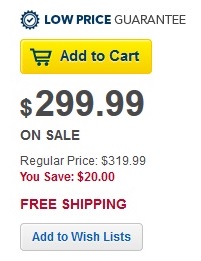
Fast forward two weeks...I checked in on the computer and, lo and behold, it was on sale for $299.99!
  YES! On Sale for $20 Off!       
As soon as I saw this sale I contacted Chase who transferred me to their Price Protection benefits provider.  After a quick discussion, they emailed me a 1-page form to fill out and some instructions.  Fifteen minutes later, I emailed them back, attaching the completed form, a screenshot of the item on sale, and my online receipt.

Yesterday, five days after I emailed in my documentation, I received the following email:

Yes!!!
Using the right credit card, knowing the benefits, and a little price checking vigilance scored me a $20 refund with minimal effort!

The tip here is simple: Know your credit cards' benefits and take advantage of them.  I'm sure the Sapphire Preferred isn't the only credit card that offers a Price Protection benefit.  Other common credit card benefits include rental car insurance, extended warranties, roadside assistance, etc.  Although credit cards with the best benefits often demand annual fees, instances like my price protection success show that sometimes they're worth it.***  


* The computer is basically used for the Internet and Microsoft Office, so we don't need too fancy of a computer.
**The Price Protection benefit states, "Receive a reimbursement for the difference between the price you paid for an eligible item on the card and a subsequent covered lower advertised price for the same item within the first 90 days of purchase."
***This $20 refund alone wouldn't cover the $95 annual fee, but that refund coupled with the 7% end-of-year dividend on points earned will provide a significant dent in the fee.  

Find This: Cheapest Diapers (Update)

In one of my earliest tips, I wrote about my quest for the cheapest Pampers diapers. I'm now ready to declare success and close the book on this topic.  The short answer is: 1) BJ's with coupons or 2) Amazon if you don't have BJ's coupons (or BJ's membership altogether).

A couple few notes before I begin:
  • It looks like diapers get more expensive per diaper as the size increases.  The price of a box seems to stay the same, but the number of diapers included decreases.  This means I can't compare the price per diaper across different sizes or maintain a static target diaper price as Baby continues to grow.  Who knew.
  • This tip is based on normal, day-to-day pricing.  I'm sure there are occasions when the stars align to create better deals.  Unfortunately, parents don't have the luxury of time when the diaper supply runs low.
  • It also turns out diapers aren't taxed in VA, so that's not a variable (for me) when comparing online to in-store purchases.  Diapers are indeed taxed in VA (6% I believe). I just got lucky last weekend and unknowingly stumbled upon a Viriginia sales tax holiday.  
Baby is about 80% through our box of Size 1s and has almost outgrown them, so I just purchased a box of 186 size 2 Pampers Swaddlers at BJs.  Regularly priced $42.99, I used a $5 off coupon from the monthly BJ's circular coupled with a $1.50 off coupon from coupons.com to attain a final price of $36.49 or 19.6 cents per diaper.  With sales tax, I think this would have cost 38.68 or 20.8 cents per diaper.  


Since the sales tax holiday is over, I'll use the 20.8 cents per diaper figure to compare BJ's to other popular options:
  • Amazon: $46.99 for a box of 204 diapers.  With free shipping and no tax, this option costs 23 cents per diaper.*  If you use the Amazon Visa to get 3% back from Amazon (vs. 2% on the credit card I used at BJ's), you'll stretch the savings by an extra 1%.  At 23 cents per diaper, that makes Amazon a close second behind BJ's with coupons and a less expensive option than BJ's without coupons, which will cost you 24.5 cents per diaper after tax.  Update: As of the evening of August 7, Amazon has an easily usable $1.50 off coupon, which takes the price down to $45.49 or 22.3 cents per diaper.
  • Diapers.com: $44.99 for a box of 160 diapers.  After taking off an additional $1.50 using a check-the-box eCoupon, that's still 27 cents a diaper.  This site may only have a respectable deal if you're using a new customer coupon.  But they have a great website name...
  • CVS: I'm not going to even waste my time.  

That's it!  No more writing about diapers unless someone tells me how I can do better than BJ's with coupons or Amazon. 


*Again, I recommend not trying Subscribe and Save because if you forget to cancel it, you'll likely be stuck with a couple hundred diapers that you're baby has outgrown.  

Read This: Final Thoughts on "Stretching" Spending

During my "Stretch" Your Spending series, I discussed how you should use Airline Dining Programs, Cash Back Portals, and Reward Credit Cards to gain more value from your spending.  When combined, saving money via shopping around and using coupons and stretching your spending through my three aforementioned tips can literally save you hundreds, if not thousands, of dollars every year.  

Below are two scenarios that describe the benefits from stretching your spending.

Restaurant Dining
Let's say you go eat dinner at Chasin' Tails in Falls Church, VA.  After some crawfish and beers, you end up with a total bill of $95.00.  Luckily, since you've been reading Our Tips and Tricks (and telling all your friends about it), you're going to stretch your spending:
  • You use your rewards credit card that gives you 5% cash back on restaurant spending.
  • You have that credit card linked with your airline dining program, earning 5 miles per dollar.
After spending $95 on dinner, you stretched that value by earning $4.75 back in cash from your credit card and accruing 475 airline miles.  Good work!

Fancy graphic showing restaurant example

Furnishings Purchase
This time, let's say you're having a baby and need to buy the big items for the nursery.  After exhaustive searching and comparisons, you elect to buy a crib and dresser from Wayfair for a total of $487.*  Now that you've learned how to stretch your spending, you:
  • You arrive at Wayfair via a cash back portal, in this case Mr Rebates because its 3% rebate is higher than the 2% offered by Ebates.
  • You join Wayfair Rewards at checkout, earning you 3% back for use on a future Wayfair purchase.
  • You pay with a rewards credit card that gives you 2 points per dollar (2%) for your purchase.
So, after spending $487, you stretched that value by earning $14.61 back via Mr Rebates, receiving another $14.61 to use on a future Wayfair purchase through Wayfair Rewards, and accumulating 974 points that are equivalent to $9.74 via your rewards credit card.  You just stretched your spending by a respectable 8%!


Another fancy graphic showing online shopping example
Bottom Line
The examples above are just two of countless scenarios that depict how you can save money and earn travel rewards (e.g., miles) by using these three tips to stretch your spending.  And this is just a tutorial for beginners.  In future posts, I'll likely refer to this advice as well as introduce more advanced tips, so it's key that you sign-up and start using these programs now.  Also, as always, if you have friends, family, or colleagues that may benefit from tips and tricks like these, point them towards OurTipsAndTricks.com!


*I love Wayfair.  It has low prices and Wayfair Rewards is legit.  The rewards can be used soon after purchase and easily.  I once used a promotion code that offered 15x Wayfair Rewards, although in this case the promotion code cancelled the rebate via the cash back portal.  Also, if you see something on Amazon that's offered by Wayfair as a seller, go to Wayfair directly to get the Wayfair Rewards and, usually, free shipping.  


Do This: Maximize Rewards Credit Card Use

To wrap up this week's "Stretch" Your Spending series, I'm going to focus on maximizing cash back returns on day-to-day spending via reward credit cards.  Please note, this tip is only for those that pay off credit cards each month, do not carry balances, and use credit responsibly.*

My two key points for using reward credit cards are:
  1. Charge everything!  Unless there's a fee or surcharge for using a credit card, use a reward credit card for all purchases.  The U.S. Treasury does not have a rewards program where they'll rebate you a penny for every dollar bill you keep in circulation, but reward credit cards will essentially pay you to use them.  Most rewards credit cards will give you back at least 1% of your charge in rewards, which brings me to my next point...
  2. A 1% return for a rewards card is not good enough!  By using the right credit card on the right purchase, you should be able to get 2% or more in rewards on every one of your purchases.  
Before I go into details, I must first acknowledge that valuing credit card rewards is a complex topic.  Each person can value rewards programs differently, with some believing United miles or Starwood points are worth the most while others prefer cash back or another one of countless hotel or airline programs.  To keep it simple, in my discussion below, I will categorize all earned rewards as points and, unless I say otherwise, each point is worth one penny.**  Furthermore, I will not examine any reward cards tied to a single frequent traveler program, as I see them having less and less value as their points are consistently being devalued (see recent Hilton, Starwood, and Marriott points devaluations).  

Easiest Way to Earn 2% on Every Purchase
  • Fidelity American ExpressThis card offers 2% cash back on all purchases when you deposit your rewards directly into an eligible Fidelity account.  Personally, I do not have this account, but it may be intriguing for a lot of people because it has no annual fee and your reward is cash.
  • Barclay Arrival: This card gives you 2 points per dollar, which is essentially worth 2.22% cash back, on every purchase.  However, you can only use your points as statement credits on travel-related charges.  For example, let's say you charge a $212.20 hotel room on your Arrival card.  You could then turn around and apply 21,220 of your points as a statement credit to remove the hotel charge.  On the plus side, Barclay will then turn around and return 10% of the points you just redeemed, redepositing 2,122 points back into your account for future use.  That extra 10% rebate on redeemed points is how I came up with 2.22% back on every purchase.  This card carries an $89 annual fee, which is waived the first year, and currently offers a 40,000 bonus points opportunity for new cardholders.  I've had this card for a few months and can confidently recommend it, at least for the first year with the waived annual fee.  
Let's Get Crazy - My Wallet

Stretching 2% out of my purchases via credit cards isn't good enough for me.  Below, I'll tell you about the credit cards I carry in my wallet, which will hopefully provide you some ideas as to how you can stretch even more value from credit cards.***
  • Chase Freedom (no annual fee): 5% cash back at gas stations (current bonus category), with merchant categories changing quarterly based on the Freedom Calendar.  From October-December, the 5% rewards apply to Amazon and select department store purchases.  5% rewards are capped on $1500 in purchases ($75 in rewards) per quarter and all other spending receives 1% cash back, which means I only use this card for the quarterly bonus categories.  Offers a $100 sign-up bonus for new customers.

2013 Chase Freedom Calendar

  • US Bank Cash+ (no annual fee): 5% cash back at all restaurants (my selected two categories for the quarter), with merchant categories changing quarterly.  Unlike the Freedom card, Cash+ cardholders get to choose two classes of merchants from among approximately ten categories for the 5% bonus and purchases are capped at $2000 per quarter.  This quarter, I chose restaurants and fast food dining as my two categories to ensure I had full coverage when eating out.  You can also choose one category from among gas stations, pharmacies, or grocery stores to earn unlimited 2% cash back. Like the Freedom, all other purchases earn 1% cash back (blech). You can supposedly only apply for this card in-person at a US Bank Branch, but someday I'll share the story of how I got this card over the phone.  
  • Chase Amazon (no annual fee): 3% back on Amazon purchases.  I use this card on all my Amazon purchases.  Points (each point is worth a penny) can only be redeemed for future Amazon purchases, but it's seamlessly integrated with your Amazon account so that you can easily use your available points as payment at checkout.  The card also gives 2 points (2%) per dollar spent at gas stations, restaurants, and drug stores.  Offers a $30 instant gift card for new customers upon signing up.
Amazon 3% and 2% Rewards Accrual
  • Chase Sapphire Preferred ($95 annual fee): At least 2% back on all travel-related and restaurant charges.  This is one of the best reward credit cards because not only can you redeem your points for cash (1 point = 1 penny), you can also use your points to book travel through Chase at an increased rate (1 point = 1.25 cents) or transfer points to Chase travel partners that include United, Southwest, Hyatt, and more.  When you transfer your points to travel partners (at a 1-to-1 ratio), you can get incredible value from your points, especially through United and Hyatt.  There are many other benefits with this card, so I recommend reading up on it.  I highly recommend it and have no qualms about paying the annual fee every year.  There is currently an offer of a waived first-year annual fee and 40,000 bonus points opportunity for new customers. 
  • Barclay Arrival ($89 annual fee): 2.22% back on all purchases.  Finally, I'll use this card for all of the outlier purchases that aren't covered by the aforementioned cards and rotating categories.  When I'm ready to use my Arrival points towards a travel charge, I'll of course make that payment on this card.  I'll revisit keeping this card in the rotation when the annual fee kicks in next year.
Wrapping it Up

Through targeted use of the credit cards above, I always stretch my credit card spending by 2-5%.  This turns into a very significant amount of money every year.  A few additional notes:
  • I've accrued these credit cards over a few years.  Don't try to get all of them at once (see *** below).
  • My summaries above only include the highlights of each card.  Most of the cards have additional benefits I didn't detail.  Likewise, this is only a snapshot of available consumer credit cards. 
  • Factor in the annual fee on the Chase Sapphire Preferred and Barclay Arrival when determining if the cards are right for you.  A benefit of the Sapphire Preferred card is that it pays cardholders a 7% dividend on points accrued at the end of the year.  I redeem that dividend as cash to "reduce" the cost of the annual fee.
  • I have other rewards credit cards, but those detailed above are the only ones I regularly use.  I'll probably revisit other credit card topics, like why I keep but rarely use my Marriott Rewards Premier Visa, in the future.
  • If you have any questions, leave a comment below and I'll answer it.


*This is because rewards credit cards typically have higher APRs, which means you'll be paying more in interest, negating the value of the rewards.  
** Before getting a new credit card, understand what each point is worth.  Some credit card issuers will offer points that have a lesser value than 1 cent each.
***If you decide to apply for any of these credit cards, please keep in mind that credit inquiries can negatively affect your credit score.  If you are going to be soon applying for a mortgage or car loan, I do not recommend applying for a new credit card.  Research and understand how credit inquiries affect your credit score.  Someday I'll learn how to do footnotes.